

Atrial Fibrillation (AFib): Symptoms, Risks, and Treatment
 By Matthew W. Segar, MD, Cardiac Electrophysiologist, Ascension St. Vincent · Last reviewed
Need an appointment? Call Carmel (317) 338-6666 or New Castle (765) 521-1461. Emergency: call 911.
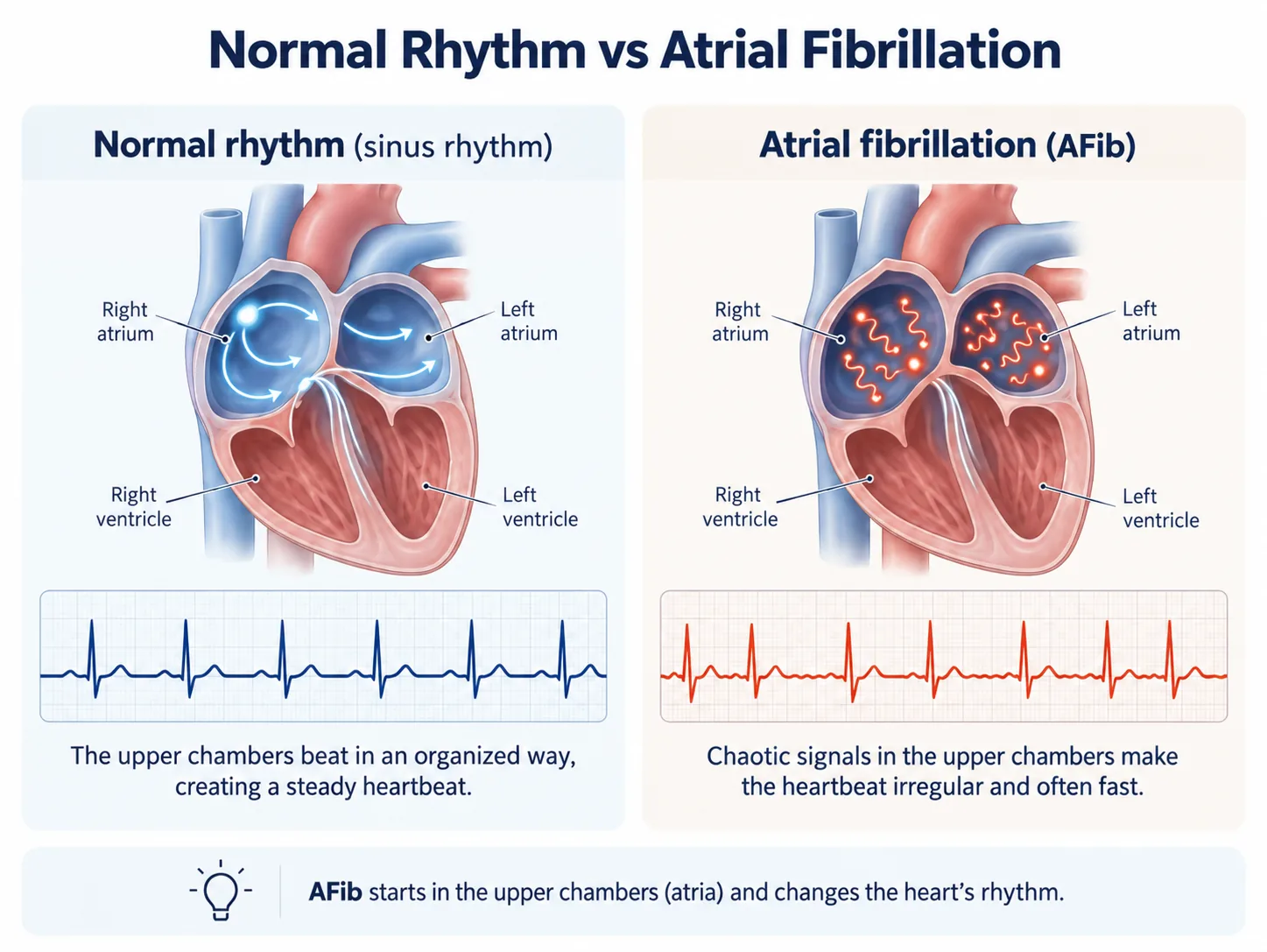
Atrial fibrillation (AFib) is a heart rhythm problem where the upper chambers beat chaotically. It raises the risk of stroke and can cause palpitations, tiredness, or shortness of breath. Treatment has three parts: prevent stroke, control the heart rate or rhythm, and treat the things that trigger AFib.
What is AFib?
Your heart has an electrical system that keeps the beat steady. In AFib, the upper chambers (the atria) fire chaotic signals. The pulse becomes irregular and often fast. AFib is the most common long-lasting heart rhythm problem.
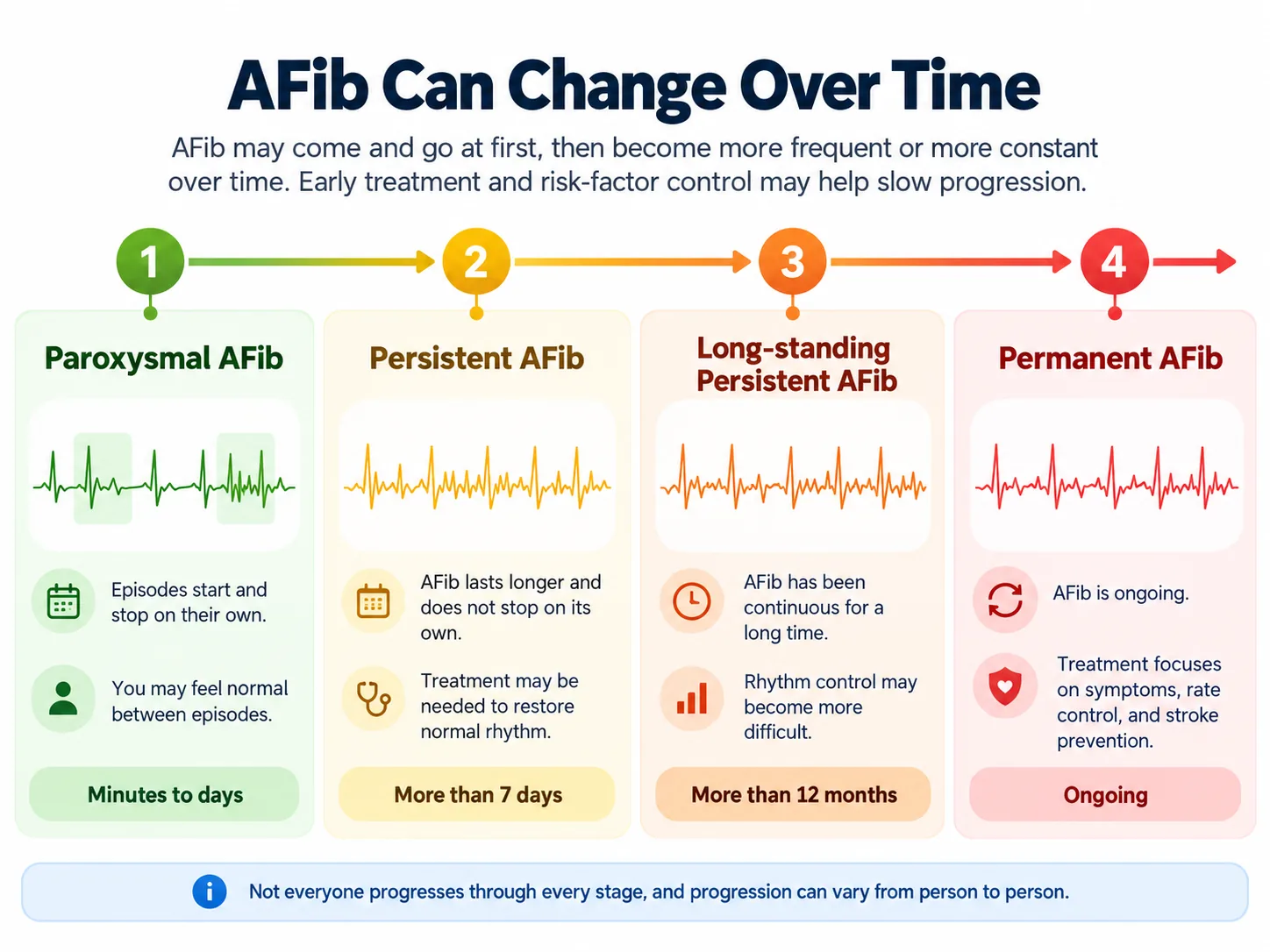
AFib often comes and goes at first. Over time, episodes can last longer or stop going away on their own.
Symptoms
Some people feel nothing. Others notice:
- A fluttering, racing, or pounding heartbeat
- Tiredness or less stamina
- Shortness of breath
- Dizziness or lightheadedness
- Chest discomfort
Many people find out about AFib from a routine ECG or a smartwatch alert.
Why treat it?
- Stroke. AFib can cause clots to form in the heart. A stroke can be prevented in most people with the right treatment.
- Symptoms. Treatment can help you feel better and exercise more.
- Heart strength. AFib that stays fast for a long time can weaken the heart muscle.
The treatment plan
1. Stroke prevention. We estimate your stroke risk using factors like age, blood pressure, diabetes, heart failure, and prior stroke. If your risk is high enough, a blood thinner (anticoagulant) is recommended. We weigh this against your bleeding risk. If you cannot stay on a blood thinner long term, Watchman, an implant that seals off the pouch where most AFib clots form, is another option.
2. Rate or rhythm control.
- Rate control uses medicine to keep the heartbeat from running too fast.
- Rhythm control tries to keep the heart in a normal rhythm. Options include medicines, cardioversion (a brief, planned electrical shock under sedation to reset the rhythm), and catheter ablation.
- Ablation treats the areas that trigger AFib, usually around the pulmonary veins. Read about pulsed field ablation, a newer technique.
3. Treat what drives AFib. This often makes the biggest difference:
- Sleep apnea
- High blood pressure
- Excess weight
- Alcohol
- Lack of regular physical activity
- Thyroid problems and other heart conditions
Getting ready to see me
Read Before your visit for what to bring, including your watch ECGs.
Common questions
Is AFib dangerous?
AFib itself is not usually immediately life-threatening. The main danger is stroke, and over time AFib can weaken the heart if it stays fast. Both risks can be reduced with treatment.
Can AFib go away on its own?
In some people AFib comes and goes (paroxysmal AFib). Over time it can become more frequent or constant. It can come back even after it has stopped for a while, so follow-up matters.
Can AFib be cured?
Ablation can stop AFib in many people, but it is not a guaranteed cure, and some people need more than one procedure. Treating risk factors improves the odds.
Do I need to take a blood thinner forever?
It depends on your stroke risk, not on whether you feel the AFib. Many people need to stay on one long term, even after a successful ablation. We decide this based on your risk score and your preferences. If bleeding makes a blood thinner unsafe for you, read about Watchman.
Can alcohol, caffeine, or poor sleep trigger AFib?
Alcohol is a clear trigger for many people. Untreated sleep apnea is a major, fixable cause. Caffeine has a smaller effect in most people than they fear, but tell me if you notice a pattern.
Make an appointment
I see patients with heart rhythm problems at Ascension Medical Group St. Vincent in Carmel and New Castle, Indiana. To schedule, use my Ascension page or call the office.
- Carmel Heart Care: (317) 338-6666
- New Castle Heart Care: (765) 521-1461
References
- Joglar JA, et al. 2023 ACC/AHA/ACCP/HRS guideline for the diagnosis and management of atrial fibrillation. Circulation. 2024;149:e1-e156.
This page is general education, not medical advice, and does not create a doctor-patient relationship. It cannot replace an exam or an ECG. If you think you are having an emergency, call 911. This is my personal website, and the views here are my own. I also build health technology products, which are not promoted on this page.